

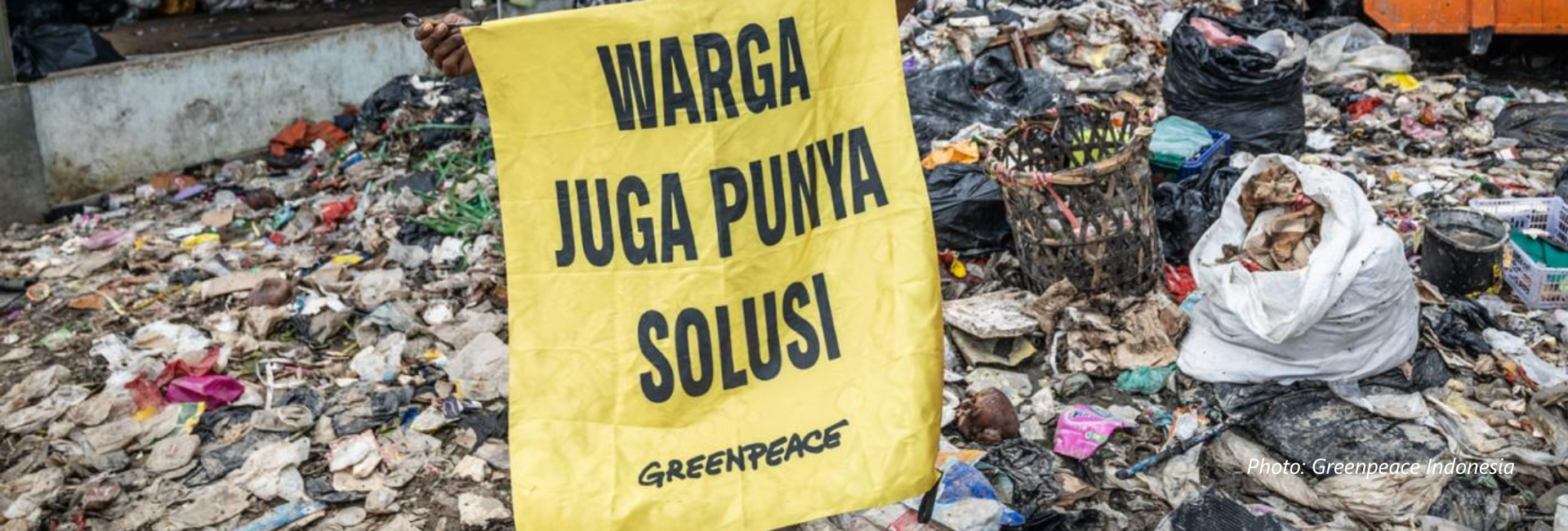
The climate crisis has become an ongoing reality that increasingly pressures people’s lives, particularly vulnerable urban groups who simultaneously face ecological, social, and economic risks. However, formal state-led responses remain far from adequate, leaving many communities to confront multiple forms of vulnerability on their own. In this context, community-based solutions have emerged organically as responses to urgent needs to reduce environmental impacts, improve quality of life, and strengthen social and economic networks. Employing a mixed-methods approach and three case studies in climate-vulnerable areas in and around DKI Jakarta—namely Pari Island, Bantar Gebang, and Rusunawa (Public Housing Complex of) Marunda—this study finds that although each case exhibits distinct vulnerabilities, they all stem from the same structural problems: (i) environmental degradation, (ii) fragile household economies, and (iii) weak governance and social protection. Communities have developed a range of local initiatives, including environmental management, livelihood strengthening, community-based economic institutions, and social services, as adaptive mechanisms to support ecological, social, and economic resilience. Nevertheless, the effectiveness and sustainability of these initiatives remain limited due to insufficient institutional support, funding constraints, and internal inequalities. Therefore, community-based solutions must be supported by inclusive and sustainable governance to ensure that adaptation processes are systemic, effective, and equitable.
Suggested Citation:
Asyah, Annabel Noor, Viona Gunawan, M. Sulton Mawardi, Talitha Aurellia Alfiansyah, Mutiara Shafa Sabita, Jonathan Farez Satyadharma (2025) ‘Solusi Krisis Iklim Berbasis Komunitas: Studi Kasus Pulau Pari, Bantar Gebang, dan Rusunawa Marunda.’ Laporan Penelitian. Jakarta: Greenpeace Indonesia <URL> [tanggal akses].