

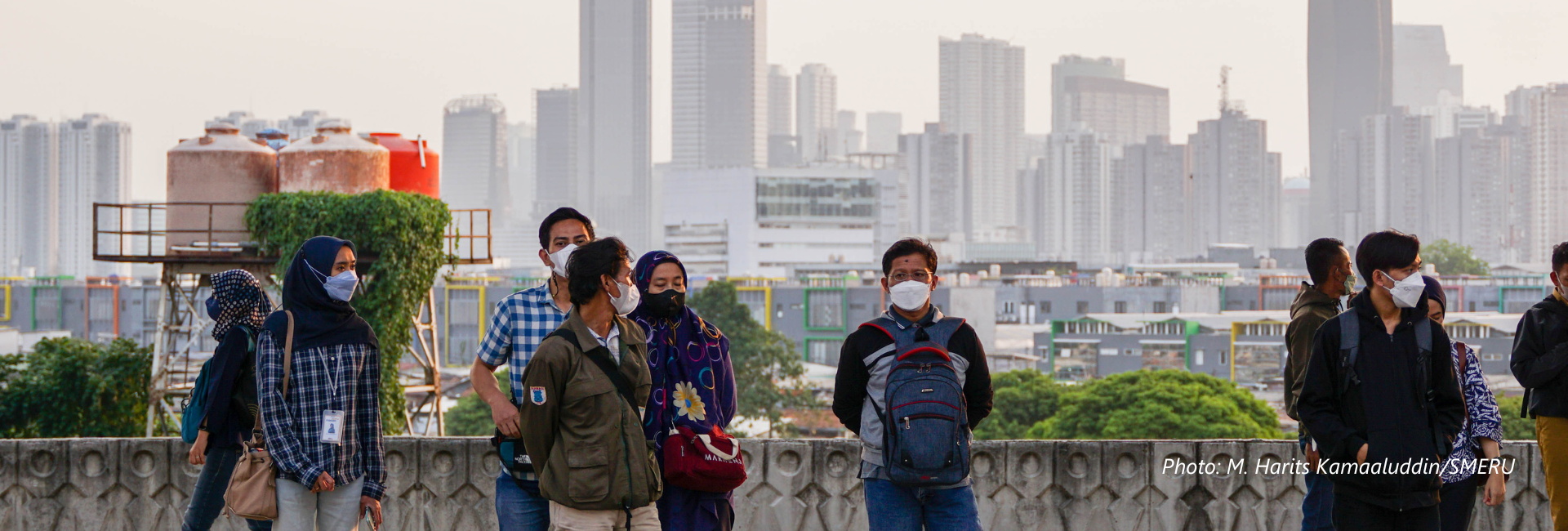
The COVID-19 pandemic caused severe economic contractions across sectors. We assess the impact of these sectoral GDP losses on workers’ labour market outcomes during the pandemic and recovery periods using Indonesian data. Using a robust difference-in-differences approach, we find that sectoral GDP losses caused significant decline in workers’ earnings, working hours, earnings per hour and formal sector employment. Conversely, they led to substantial increases in job search and employment in the informal sector. These impacts persisted into the recovery period, albeit with declining magnitudes. Furthermore, we find heterogeneous impacts with workers in rural areas, with male workers and young workers often experiencing more severe effects. These findings imply that social assistance must be maintained beyond the crisis and tailored to specific groups. Improving the labour market information system is also crucial to facilitate the transition to formal employment.