The thrifting phenomenon (shopping for second-hand clothing) has become increasingly popular in Indonesia. However, behind this popularity lies various debates. On one hand, thrifting provides a more affordable clothing alternative and reduces environmental impacts; on the other hand, it pressures the competitiveness of the domestic textile and textile product industry.
So, what is the actual overview of the second-hand clothing trade in Indonesia? Are there indications of discrepancies in the recording of second-hand clothing import transactions? And what kind of policies can balance the protection of the domestic textile industry and consumer interests?
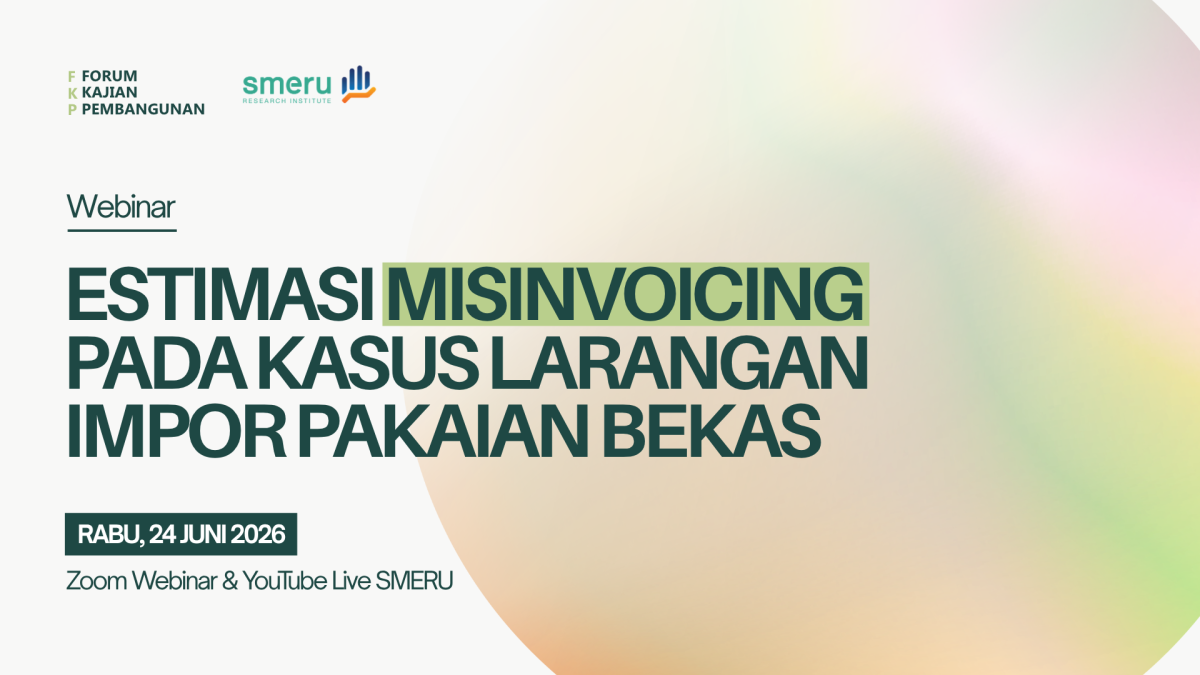
Join us in the Forum Kajian Pembangunan (FKP): "Estimating Misinvoicing Under the Second-Hand Clothing Import Ban."