

Intimate partner violence (IPV) remains a serious issue in Indonesia. One factor that allows such violence to persist is the belief that men should hold greater power in relationships and that women should have limited say in family decisions. Challenging these unequal gender norms is an important step toward preventing violence and building healthier relationships.
Programs that promote more equal gender norms have shown promising results in reducing IPV. However, most existing studies have focused on secular settings or faith-based programs in Christian communities. Less is known about how these approaches work in Muslim-majority contexts.
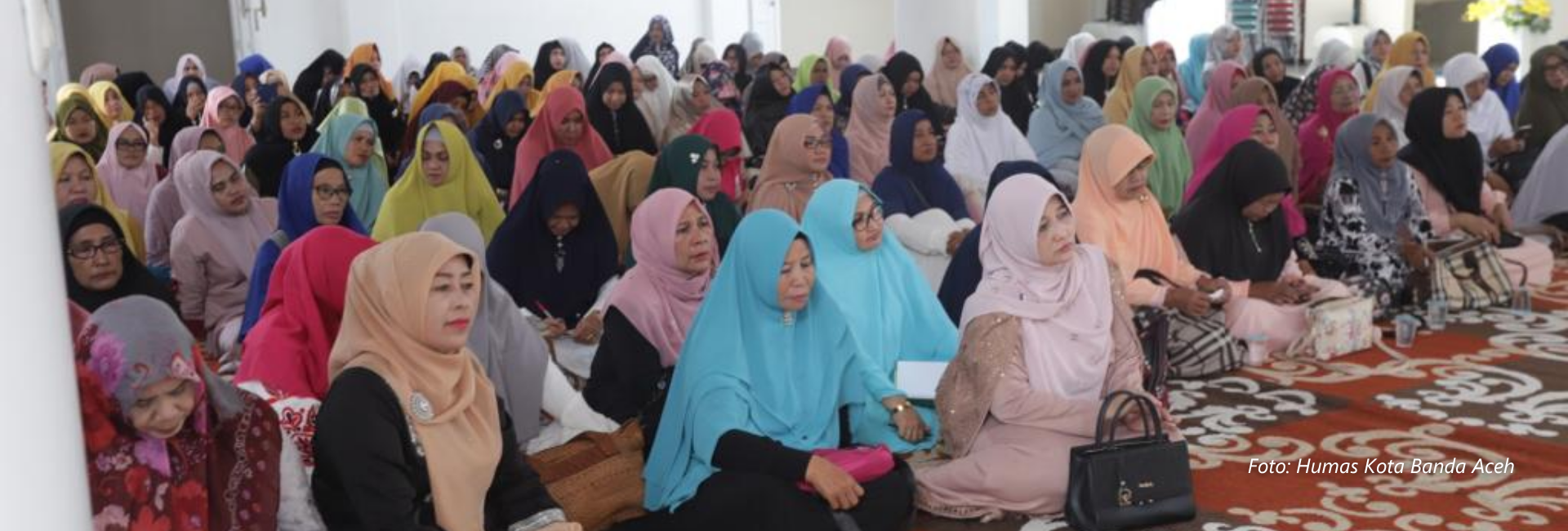
To explore this possibility, SMERU examines whether structured discussions led by female Muslim religious leaders can influence their attitudes toward IPV and related gender norms. By comparing these discussions with similar sessions led by female community leaders, the study seeks to understand whether religious leaders play a distinct role in promoting more equitable views on gender and relationships.
The study is expected to contribute to the growing body of evidence on the effectiveness of community-based and faith-based approaches to transforming gender norms and attitudes toward intimate partner violence. Its findings may also provide valuable insights for policymakers, practitioners, and civil society organizations seeking to design more effective and context-sensitive interventions to prevent intimate partner violence in Indonesia.
This study explores whether female leaders can help prevent IPV by changing gender norms through community-based training for women.
This study uses a cluster randomized controlled trial (RCT) involving 120 villages in Cilacap District, Central Java. The villages are randomly assigned to one of three groups:
- Gender norms discussions led by female Muslim religious leaders (ulema) using religious teachings.
- Similar discussions led by female community leaders (PKK cadres) using a non-religious approach.
- A control group that does not receive the intervention (discussions).
Through baseline and endline surveys, this study measures changes in the attitudes of married women aged 18–49 regarding gender roles, household decision-making, attitudes toward violence, and communication skills. The study also examines whether the impacts of the intervention extend to other women in the community.