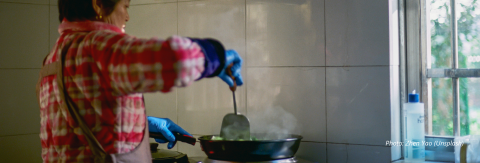


This research examines male participation in unpaid care work (UCW) in Indonesia, focusing on the sociocultural context, intergenerational perspectives, and advocacy strategies to promote a more equitable distribution of care work. Using a mixed-method approach, a household survey was conducted with 1,599 households in Jakarta Barat, Pandeglang, Gorontalo, and Lombok Timur, complemented by qualitative data collection in Gorontalo and Lombok Timur through interviews, focus group discussions, and diary studies. The findings indicate that while there is substantial support for men engaging in UCW across all research locations, there remains a significant gap between positive perceptions and daily practice. Younger and more educated couples are more likely to share care work responsibilities, while older households tend to uphold traditional roles. Early exposure to UCW during childhood, particularly through being taught household tasks or having role models, strongly predicts adult engagement. Community norms—especially perceptions of neighbors’ attitudes—emerge as the most significant driver, while patriarchal norms continue to shape which tasks are deemed “appropriate” for men. Five advocacy strategies—media, religious sermon, political, grassroots/community organization, and program-based intervention—demonstrate promising practices, although each strategy faces challenges, including cultural resistance and limited resources. The research concludes that male involvement in UCW remains inconsistent, despite the growing normative acceptance. Bridging this gap requires embedding UCW skills in early childhood education, promoting role modelling, leveraging peer and neighborhood norms, addressing persistent gender stereotypes, and sustaining advocacy through a combination of community-based, cultural, and policy-level approaches. Multilevel and long-term efforts are essential to shift both social norms and household behaviors toward a more equitable sharing of care work.
Suggested Citation
Bima, Luhur, Rezanti Putri Pramana, Dyan Widyaningsih, Hartika Arbiyanti, and Esha Adnan (2026) ‘Understanding Social Norms Related to Unpaid Care Work.’ Jakarta: The SMERU Research Institute <URL> [access date].
Editor(s)
 Download (4.74 MB)