

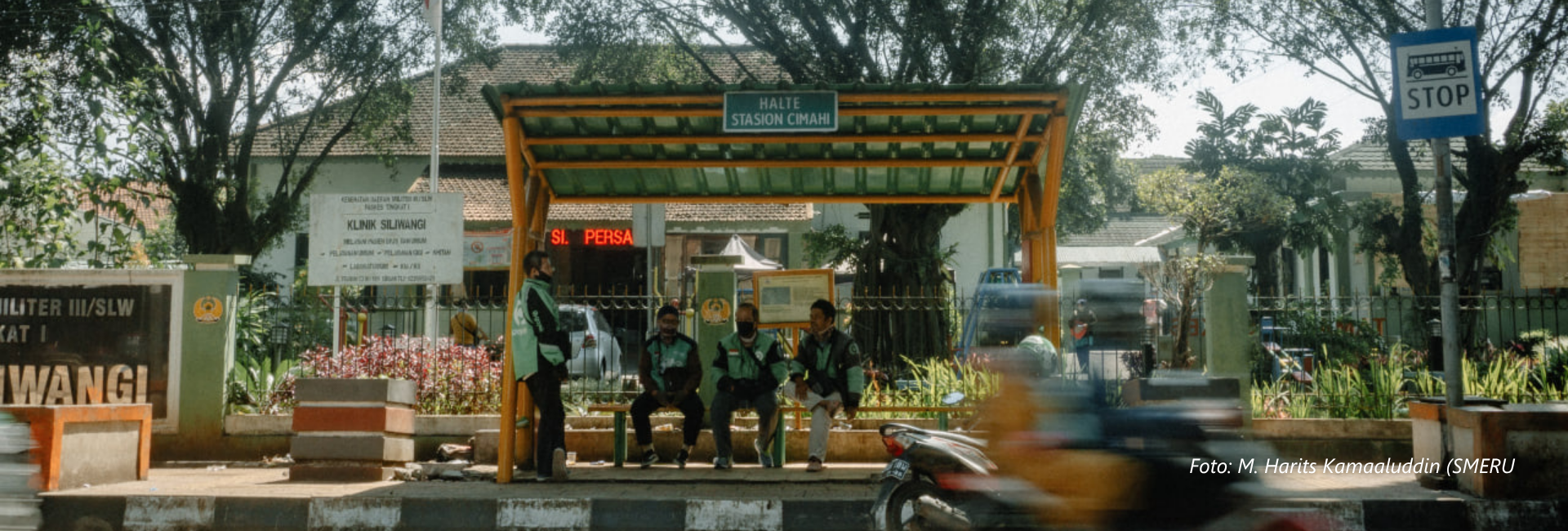
Gender inequality remains a major challenge in the labor market. Women often face social and structural barriers that limit their job opportunities, particularly in male-dominated sectors. This is evident in the online motorcycle taxi sector in Indonesia, where the number of female drivers remains very low despite growing demand from female passengers.
In fact, working as an online motorcycle taxi driver offers flexible hours and relatively low entry barriers—two features that should support women’s participation, especially for those with significant household responsibilities. However, concerns about safety, lack of family support, and the absence of female role models continue to limit access. Discriminatory practices from passengers further reinforce the perception that this job is more suitable for men.
Various initiatives have been introduced, including safety training and mentoring programs for female drivers. Yet, their impact has been limited, as they often fail to address the root cause: deeply entrenched gender norms. Evidence from previous studies suggests that the presence of female role models can help shift perceptions and encourage women to enter non-traditional sectors.
Amid rapid digital transformation driven by platforms such as Gojek and Grab, low female participation signals systemic barriers that must be addressed to prevent women from being left behind in the growing digital economy. Closing this gap is not only a matter of equity but also essential for inclusive growth. This study by SMERU seeks to better understand how gender norms and social factors influence women’s participation as online motorcycle taxi drivers in Indonesia.
This study aims to understand how gender norms and social factors influence women’s participation as online motorcycle taxi drivers in Indonesia. It also explores the effectiveness of role model–based interventions and mentoring programs in addressing the barriers they face.
Specifically, the study focuses on several key areas:
- Testing the feasibility and effectiveness of a video-based intervention to encourage women’s participation in the online motorcycle taxi sector
- Evaluating recruitment strategies to identify the most efficient and effective approaches
- Assessing early indications of whether the intervention can increase women’s interest in online motorcycle taxi work
- Examining the technical aspects of the survey (such as duration, response rates, and implementation challenges) to inform improvements prior to a full-scale randomized controlled trial (RCT)
The findings are expected to inform more targeted policy recommendations to increase women’s participation in the online motorcycle taxi sector and promote gender equality in the digital economy.
This study employs a mixed-methods approach to understand women’s interest in and barriers to entering the online motorcycle taxi sector in DKI Jakarta.
The qualitative study includes in-depth interviews and focus group discussions (FGDs) with 10 female ride-hailing drivers to explore gender norms, recruitment strategies, and the enabling and constraining factors of working in the ride-hailing sector. Findings from the FGDs and interviews are then used to develop a video-based intervention delivered to female respondents in the survey stage.
The quantitative study involves 100 women aged 18–45 in West Jakarta who are visited over a three-month period through baseline, midline, and endline surveys. During the baseline survey, participants watch the intervention video, while the midline and endline surveys measure changes in attitudes, job-search behavior, and employment participation in the ride-hailing sector.
To gain deeper insights into the effectiveness of the intervention and women’s decision-making processes, follow-up qualitative interviews are also conducted with 15 respondents.